Boom Lift vs. Scissor Lift: What’s the Difference?
When working at height, choosing the right equipment is essential for both safety and productivity. Two of the most common aerial lifts used on construction sites, warehouses, maintenance projects, and commercial jobs are boom lifts and scissor lifts. While they may appear similar at first glance, each is designed for different applications.
Understanding the differences between a boom lift vs. scissor lift can help you select the right equipment, improve jobsite efficiency, and reduce unnecessary costs. Whether you’re painting a commercial building, installing lighting, trimming trees, or performing facility maintenance, knowing which lift to rent can make all the difference.
What Is a Boom Lift?
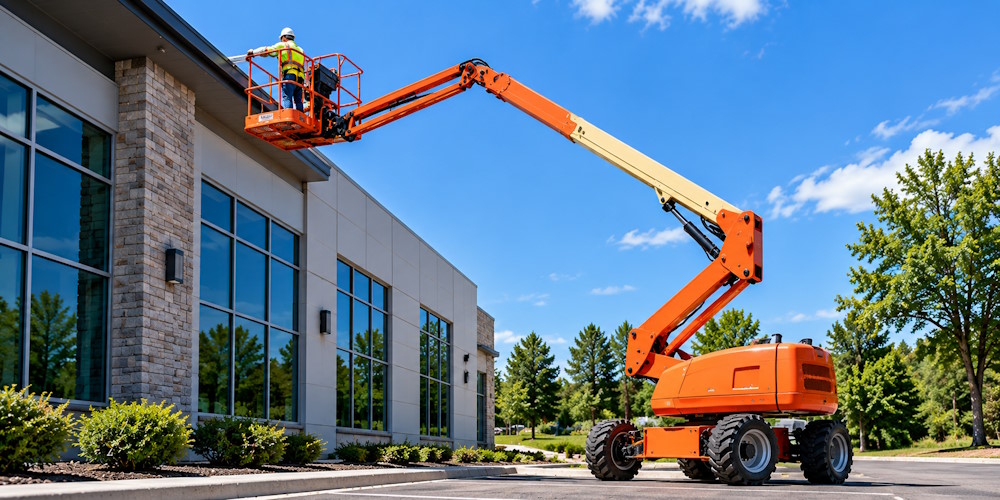
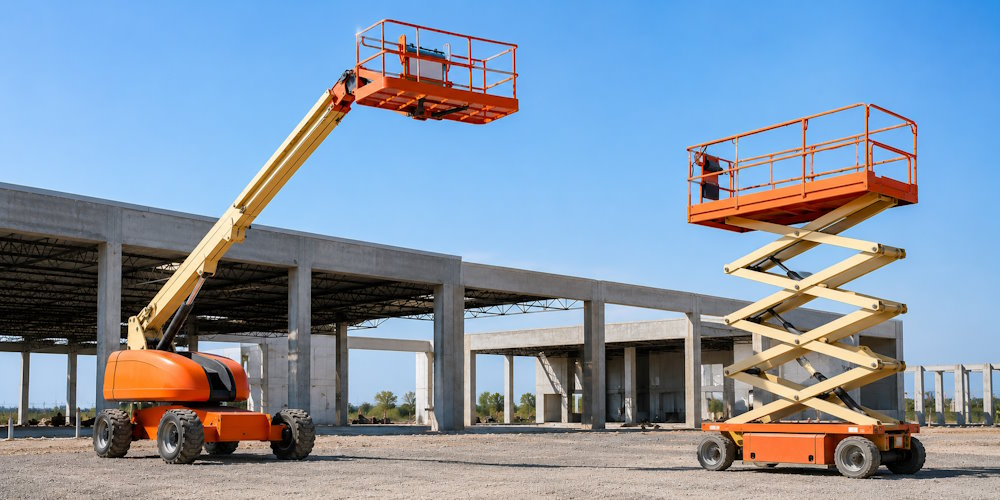
A boom lift is an aerial work platform that uses a hydraulic arm (or boom) to lift workers both vertically and horizontally. Unlike scissor lifts, boom lifts can extend outward, allowing operators to reach areas that aren’t directly above the machine.
Boom lifts are commonly used for:
- Building construction
- Exterior painting
- Roofing projects
- Utility work
- Tree trimming
- Sign installation
- Window cleaning
- Bridge inspections
Because they offer exceptional reach and maneuverability, boom lifts are ideal when obstacles prevent direct access to the work area.
What Is a Scissor Lift?
A scissor lift raises workers straight up using crisscrossing metal supports that expand vertically. Unlike boom lifts, scissor lifts cannot extend outward and are designed strictly for vertical access.
Their large platforms allow multiple workers to safely perform tasks while bringing tools and materials with them.
Scissor lifts are commonly used for:
- Warehouse maintenance
- Electrical work
- HVAC installation
- Indoor construction
- Drywall installation
- Ceiling repairs
- Painting interiors
- Retail facility maintenance
If your work area is directly overhead and requires a stable working platform, a scissor lift is often the better choice.
Boom Lift vs. Scissor Lift: The Biggest Differences
Although both machines elevate workers safely, they differ in several important ways.
1. Reach
The biggest difference between a boom lift vs. scissor lift is how they reach the work area.
Boom lifts provide:
- Vertical reach
- Horizontal outreach
- Up-and-over access
- Greater working height
Scissor lifts provide:
- Straight vertical lifting only
- No horizontal extension
- Excellent stability at height
If you need to reach over obstacles such as landscaping, machinery, fences, or equipment, a boom lift is the clear winner.
2. Working Height
Boom lifts generally offer significantly higher working heights than scissor lifts.
Typical boom lifts can reach anywhere from 30 feet to well over 150 feet depending on the model.
Scissor lifts typically range from about 20 to 50 feet, making them ideal for many indoor and commercial applications.
For extremely tall projects, boom lifts often provide the necessary reach.
3. Platform Size
Scissor lifts feature larger platforms that comfortably accommodate multiple workers, tools, and materials.
This makes them ideal for jobs requiring continuous work in one location.
Boom lifts usually have smaller baskets designed for one or two workers and essential tools.
If your project involves installing ceiling tiles or electrical fixtures across a wide area, the larger platform of a scissor lift can improve efficiency.
4. Maneuverability
Boom lifts excel when navigating around obstacles.
Because the boom arm articulates or telescopes outward, operators can reach difficult areas without repositioning the machine repeatedly.
Scissor lifts move efficiently on flat surfaces but must remain directly beneath the work area.
For projects requiring flexibility and hard-to-reach access, boom lifts offer a significant advantage.
5. Indoor vs. Outdoor Use
Both lift types are available in models designed for indoor and outdoor applications.
Scissor lifts are frequently chosen for:
- Warehouses
- Distribution centers
- Manufacturing facilities
- Schools
- Retail stores
- Commercial buildings
Boom lifts are commonly used outdoors for:
- Construction projects
- Utility work
- Landscaping
- Municipal maintenance
- Industrial facilities
- Exterior building maintenance
The work environment often helps determine which lift is most appropriate.
6. Terrain Capability
Many boom lifts are specifically designed for rough terrain.
These models feature:
- Four-wheel drive
- Large off-road tires
- Higher ground clearance
- Improved stability on uneven surfaces
While rough-terrain scissor lifts are also available, standard electric scissor lifts perform best on smooth, level surfaces.
For construction sites with uneven ground, boom lifts often provide better mobility.
Which Lift Is Right for Your Project?
When deciding between a scissor lift vs. boom lift, ask yourself a few important questions.
Choose a boom lift if you need:
- Horizontal reach
- Maximum working height
- Access over obstacles
- Outdoor performance
- Flexible positioning
Choose a scissor lift if you need:
- Straight vertical access
- Larger work platform
- Multiple workers on the platform
- Indoor operation
- Stable overhead work
Matching the lift to the job improves safety while reducing project time.
Safety Is Always the Priority
Regardless of which aerial lift you choose, operators should always follow proper safety procedures.
Best practices include:
- Inspecting equipment before use
- Wearing appropriate fall protection when required
- Following manufacturer operating guidelines
- Avoiding overloaded platforms
- Using the lift only on suitable surfaces
- Remaining aware of overhead hazards and power lines
- Ensuring operators receive proper training
Using the correct lift for the application is one of the most important steps in maintaining a safe jobsite.
Why Rent Instead of Buy?
For many contractors and property owners, renting aerial lifts provides greater flexibility and lower operating costs.
Equipment rentals eliminate concerns such as:
- Long-term maintenance
- Storage requirements
- Transportation logistics
- Equipment depreciation
- Large upfront investments
Renting also allows you to choose the exact lift needed for each individual project rather than relying on a single machine for every job.
Find the Right Lift at Arnold’s Equipment Rentals
At Arnold’s Equipment Rentals, we offer a wide selection of boom lifts, scissor lifts, and other aerial equipment to help you complete your project safely and efficiently. Whether you’re working indoors, outdoors, on smooth concrete, or rough construction sites, our knowledgeable team can help you select the right equipment for your specific application.
We maintain our rental fleet to the highest standards and are committed to providing dependable equipment, competitive rental rates, and exceptional customer service. If you’re unsure whether a boom lift or scissor lift is the better choice, we’re happy to answer your questions and recommend the best solution for your project.
Rent the Right Equipment for the Job
Choosing between a boom lift vs. scissor lift comes down to understanding your project’s height requirements, work environment, and access needs. Selecting the proper aerial lift improves productivity, enhances safety, and helps your project stay on schedule.
Contact Arnold’s Equipment Rentals today to learn more about our boom lift and scissor lift rentals. Our experienced team is ready to help you find the right equipment to get the job done safely and efficiently.