What Is an Articulating Boom Lift? How It Works & When to Use One
When a project requires you to work high above the ground, getting to the correct height is only part of the challenge. Sometimes you also need to get over, around, or past an obstacle to reach the work area.
That’s exactly what an articulating boom lift is designed to do.
Whether you’re performing building maintenance, working around a roofline, trimming trees, installing exterior equipment, or tackling another elevated project, understanding how an articulating boom lift works can help you decide whether it’s the right type of boom lift rental for your job.
What Is an Articulating Boom Lift?
An articulating boom lift is a mobile elevated work platform with a boom made up of multiple hinged sections. Those joints allow the boom to bend as it raises and extends the platform.
Because of its jointed design, an articulating boom lift is sometimes called a “knuckle boom” or “Z-boom.”
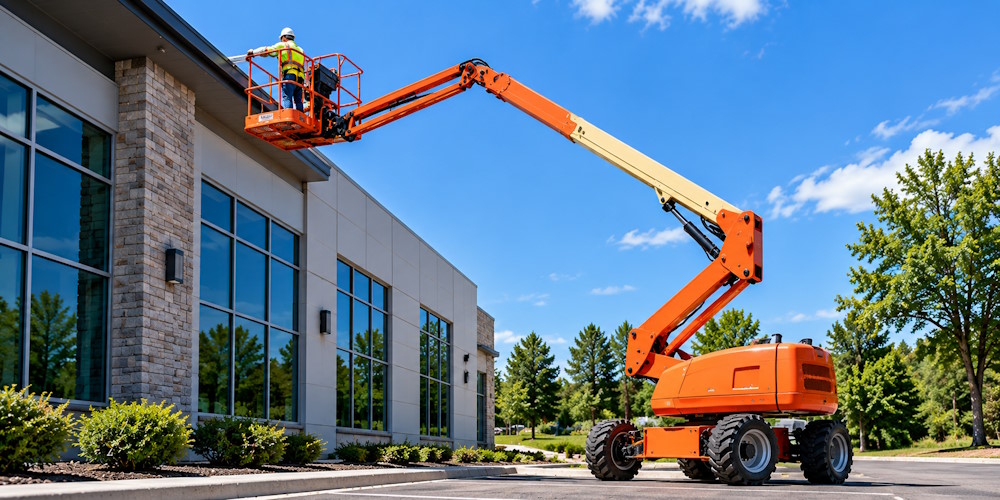
Instead of simply extending outward in a straight line, the articulating arm can provide what’s commonly described as “up-and-over” access. The operator can raise the platform and maneuver it over or around obstacles to reach difficult work areas.
How Does an Articulating Boom Lift Work?
Think of the boom somewhat like an arm with an elbow. Multiple sections are connected by pivot points, allowing the operator to change the angle of different sections of the boom.
The platform or basket is located at the end. From the platform controls, a trained operator can position the lift to reach an elevated work area within the machine’s approved operating envelope.
This design gives articulating boom lifts an important advantage: flexibility.
For example, imagine you need to work on the upper portion of a building, but landscaping, a lower roof, equipment, or another structure prevents you from positioning the lift directly underneath the work area. An articulating boom may allow you to position the machine farther away and maneuver the platform up and over the obstacle.
Articulating vs. Telescopic Boom Lift
One of the most common questions when choosing a boom lift is whether you need an articulating or telescopic model.
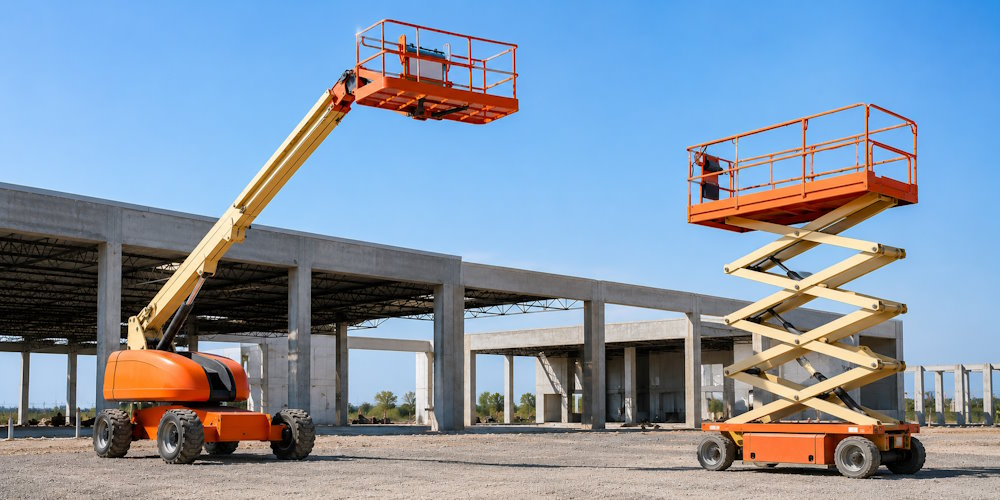
A telescopic boom lift—sometimes called a straight boom—uses boom sections that extend outward in a relatively straight line. These machines are particularly useful when you need substantial vertical height and horizontal outreach with a relatively unobstructed path to the work area.
An articulating boom lift uses hinged sections that provide more flexibility when obstacles are in the way.
A simple way to think about the difference is:
- Telescopic boom lift: Ideal for reaching high and far with a more direct path.
- Articulating boom lift: Ideal for reaching up, over, and around obstacles.
The correct choice depends on the specific model, required height, horizontal outreach, platform capacity, terrain, and layout of your worksite.
What Are Articulating Boom Lifts Used For?
The maneuverability of an articulating boom makes these lifts useful for many commercial, construction, maintenance, and property improvement projects.
Building Maintenance
Articulating boom lifts can help workers reach elevated portions of buildings while navigating around lower roofs, architectural features, landscaping, and other obstructions.
Exterior Painting and Repairs
For large buildings or structures, a boom lift can provide access to areas that may be difficult to reach using conventional ladders.
Tree and Property Maintenance
When properly selected and operated for the application, an aerial lift can provide elevated access for certain property maintenance projects where branches or other obstacles make positioning challenging.
HVAC and Mechanical Work
Commercial buildings often have HVAC units, ductwork, piping, lighting, and mechanical systems in difficult-to-access locations. The articulating boom’s ability to reposition the platform can be particularly valuable in these environments.
Electrical and Lighting Projects
Elevated exterior lighting, signs, and other building components may require access from different angles. Articulating lifts can provide the flexibility needed to position workers near the work area.
Construction
Construction sites frequently contain walls, equipment, materials, and partially completed structures. An articulating boom can help workers maneuver around these obstacles while accessing elevated areas.
When Is an Articulating Boom Better Than a Scissor Lift?
A scissor lift primarily moves its platform vertically. This makes scissor lifts useful when the machine can be positioned directly beneath or very close to the work area.
A boom lift adds horizontal reach.
If you need to move both upward and outward—or navigate around something between the machine and the work area—a boom lift may be more appropriate.
That doesn’t automatically make a boom lift “better.” The right aerial equipment depends on working height, required outreach, platform capacity, surface conditions, access restrictions, and the work being performed.
What Should You Know Before Renting an Articulating Boom Lift?
Before choosing a lift, take a careful look at your worksite and project requirements.
Required Working Height
Determine how high the work area actually is. Don’t choose equipment based on a rough guess. The required platform and working height should be matched to an appropriate machine.
Horizontal Outreach
Height isn’t the only measurement that matters. If the machine must be positioned away from the structure, determine how far horizontally the platform needs to reach.
Obstacles
Identify rooflines, trees, walls, fences, equipment, landscaping, and other objects that could affect where the machine can be positioned or how the boom must move.
Ground Conditions
Consider whether you’ll be operating on pavement, concrete, gravel, compacted soil, or rough terrain. The surface and slope can affect which lift is appropriate for the project.
Platform Capacity
Account for the operator, additional occupants when permitted, tools, and materials. Never exceed the manufacturer’s rated capacity for the machine.
Safety Matters When Using a Boom Lift
Boom lifts are powerful pieces of equipment and should only be used in accordance with the manufacturer’s instructions, applicable regulations, site requirements, and appropriate operator training.
Before operation, users should understand the machine’s controls and limitations, inspect the equipment and work area, use required fall protection, maintain appropriate clearance from electrical hazards, and pay close attention to weather and ground conditions.
If you’re unfamiliar with aerial equipment, discuss your project and operating requirements with the rental company before choosing a machine.
Find the Right Boom Lift for Your Connecticut Project
The biggest advantage of an articulating boom lift is not simply how high it can reach—it’s where it can position you. When an obstacle stands between the machine and the work area, the jointed boom can provide access that a straight-line lift may not.
Arnold’s Equipment Rentals carries boom lifts for rent in Connecticut for a variety of elevated projects. Our inventory includes equipment from manufacturers such as JLG and Genie with different heights and outreach capabilities.
If you’re not sure which type of lift your project requires, contact Arnold’s Equipment Rentals. Tell us what you’re trying to reach, how high it is, what’s around it, and what the ground conditions are like, and we can help you identify the appropriate rental equipment for the job.